
Add products by adding codes
Thermostatic expansion valves and orifices
( number of products: 13 )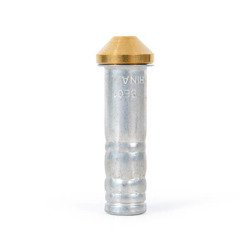
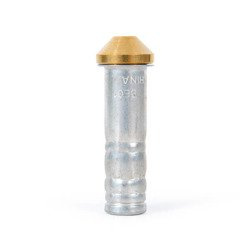
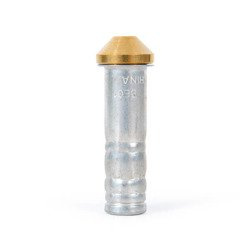
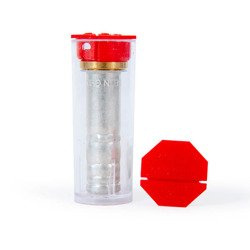
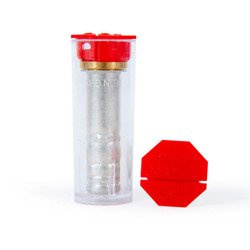


Thermostatic valves
One of the most important components in refrigeration automation, whose task is to maintain the required temperature at a constant level, is the throttling element. Its role is to regulate the refrigerant flow in such a way as to maintain a balance between the amount of injected refrigerant and the amount of vapor suctioned from the evaporator by the compressor. This function in a refrigeration system can be fulfilled by: capillary tube, automatic expansion valve, thermostatic expansion valve, electronic expansion valve, or low-/high-pressure float valve.
The thermostatic expansion valve (TXV) controls the amount of refrigerant supplied to the evaporator based on the degree of superheat. To perform this function, the TXV is equipped with a control element whose sensor (a metal bulb) mounted at the evaporator outlet measures the actual superheat temperature of the refrigerant vapor. There are several sensor charge types available:
-
vapor-liquid (known as MOP – Maximum Operating Pressure),
-
liquid charge,
-
adsorption charge.
Depending on the type of charge, different valve characteristics can be achieved in terms of sensitivity, response time, preferred temperature ranges, and capacity.
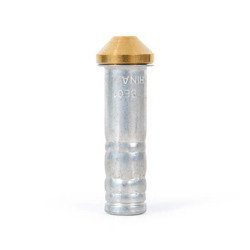
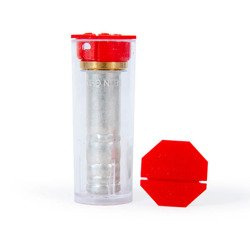
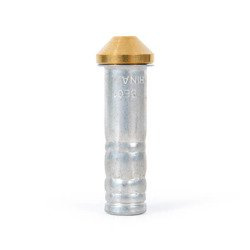
Our offer includes thermostatic expansion valves with interchangeable orifices from Danfoss, available with flare or solder connections. They operate within a temperature range of -60°C to +50°C and offer nominal capacities up to several kilowatts. We also provide nozzle/filter assemblies, with nominal capacities specified at:
-
evaporation temperature te = +5°C for range N (–40 to +10°C),
-
evaporation temperature te = –30°C for range B (–60 to –20°C),
-
condensing temperature tc = +32°C,
-
liquid temperature before the valve tl = +28°C.
To ensure proper operation of the expansion valve, installation rules must be strictly followed, particularly regarding:
-
the location and method of mounting the sensor,
-
the installation of the equalizing line,
-
and thermal protection of the valve during soldering.
If you need a detailed guide on how to select the correct orifice, please refer to our in-depth article on this topic.